Asset Tracking Software for Parkwood Institute Hospital
Mahad Farooq
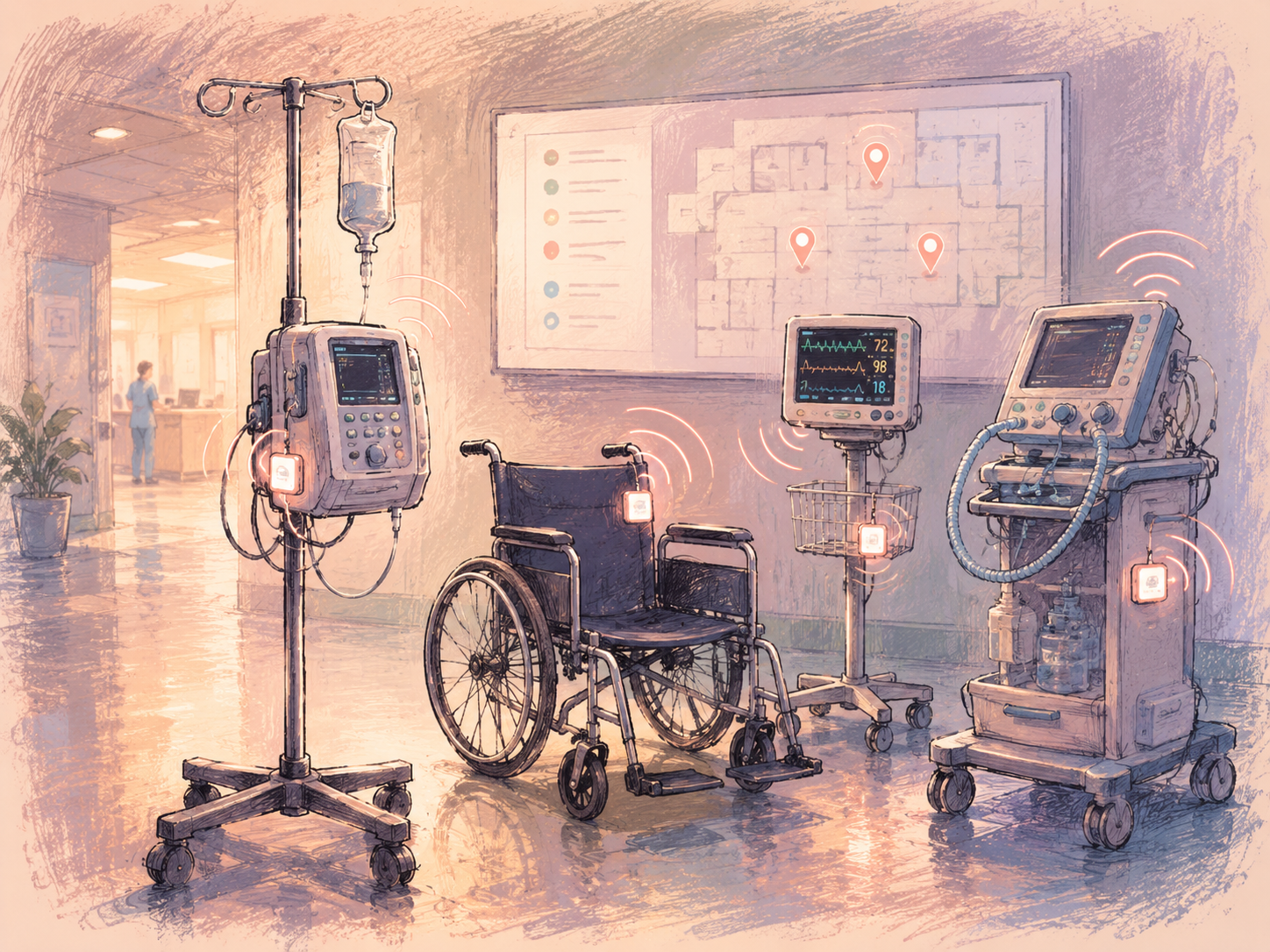
This was my big group project for first year engineering. The job sounded simple at first: hospitals lose track of their equipment, so build something that finds it. IV pumps, wheelchairs, monitors, ventilators, all of it moving around the building, nobody knowing where anything is.
But once we actually talked to the client, the real problem showed up. And it wasn't what we thought.
The problem wasn't finding the equipment
Everyone assumes hospitals can't locate their devices. That's the surface. The actual problem was three things underneath it:
It costs too much. Hospitals won't pay for a fancy system. If it's expensive, it doesn't matter how good it is, it's dead on arrival.
Nobody updates the logs. This is the killer. They'd tried systems before where staff had to manually scan or log equipment. Guess what? Nurses are busy keeping people alive, they're not going to stop and update a spreadsheet. And the second people stop logging, the whole system is useless. A tracker nobody feeds is just a paperweight.
The batteries died. Their old trial used RFID-style tags that pinged the server constantly. Constant pinging drains the battery fast, so tags would die in months. A tracker with a dead battery tracks nothing.
So the real challenge was never “how do we find a wheelchair.” It was “how do we build something cheap, that doesn't rely on humans remembering to do anything, and that doesn't die every few months.”
Solve the device, you've solved nothing. Solve the cost, the laziness, and the battery, and now you've actually got something.
Our idea: let the equipment do the work, not the people
The trick was taking the human out of the loop completely. No scanning, no logging, no “please remember to update the system.” The equipment tracks itself.
We put a small tag on each piece of equipment. Receivers around the building pick up the tags as they move past, and a backend logs where each thing was last seen and when. Staff just open the site, search “IV Pump 12,” and see “last seen 4 minutes ago, Storage Area C.” Done.
Nobody has to do anything. The system runs whether people cooperate or not, which is the only way it survives in a real hospital.
Killing the battery problem with motion
The battery was the part I kept coming back to. If the tags die, everything dies with them.
The fix was actually pretty simple once we stopped overcomplicating it. The old systems were always awake, always pinging. Ours sleeps.
The tag does nothing until something moves it. A motion sensor wakes it up, it sends its location, and if it sits still in the same spot for a couple minutes, it drops into a low-power sleep mode. A wheelchair parked in a corner for six hours isn't burning battery the whole time, it goes to sleep and only wakes up when someone actually grabs it.
Equipment that isn't moving doesn't need tracking. So we don't track it. That one idea is what let us promise batteries lasting years instead of months.
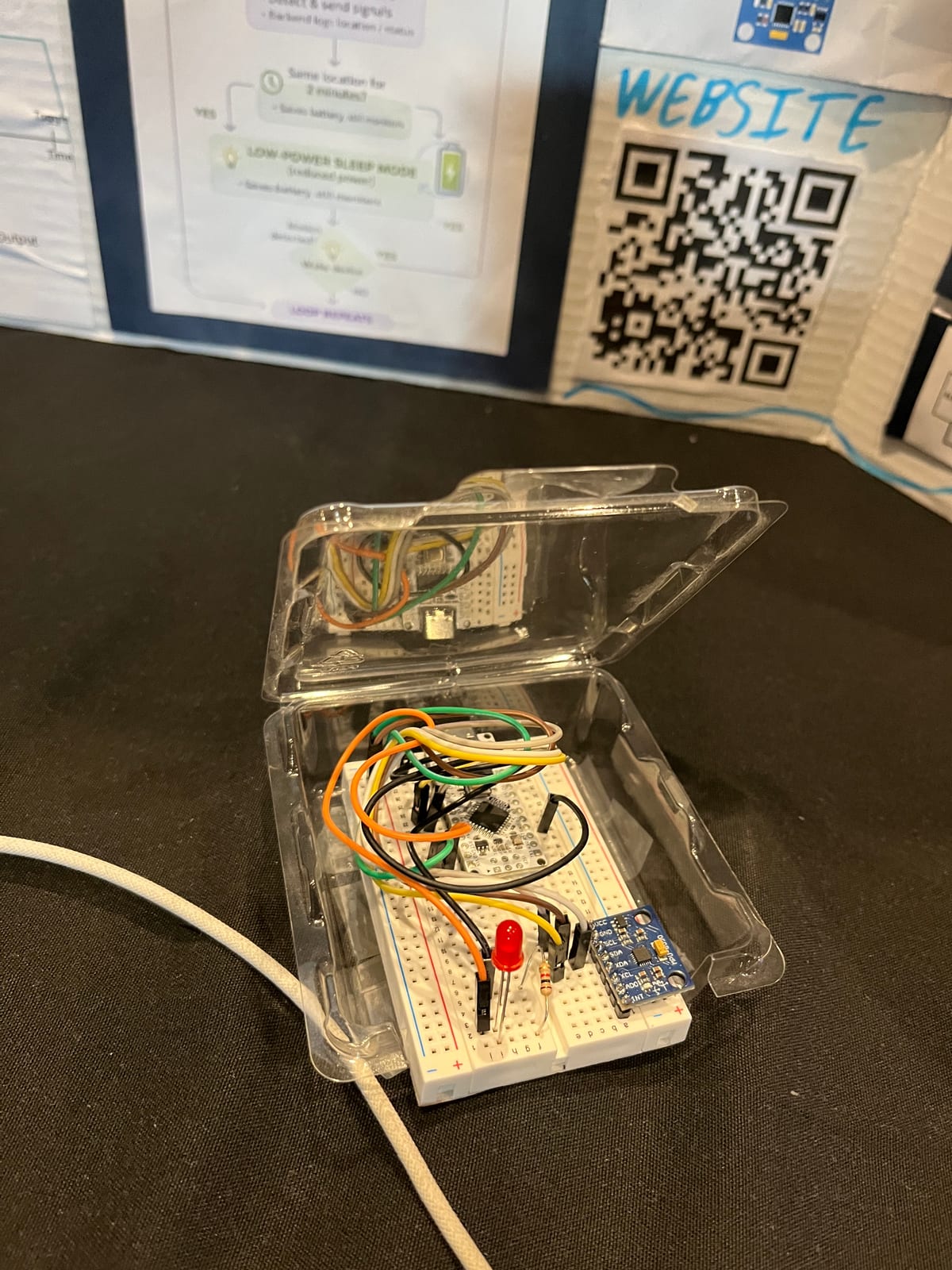
Here's the actual thing. That little blue board up top is the accelerometer, and it's the whole trick. When a piece of equipment sits still, it reads nothing and the tag stays asleep. The second someone bumps it or wheels it off, the reading spikes, the microcontroller wakes up, sends its location, and drops right back to sleep. The red LED was just for the demo table, it flicks on the instant motion is detected so you can actually watch the wake happen instead of taking our word for it.
My part: building the software
The hardware guys handled the sensors and the microcontroller. I took the software, the part that turns a pile of location pings into something a real person can actually use.
I built the backend that logs each device's location and status, and the interface on top of it. Different people need different things, so I made different views.
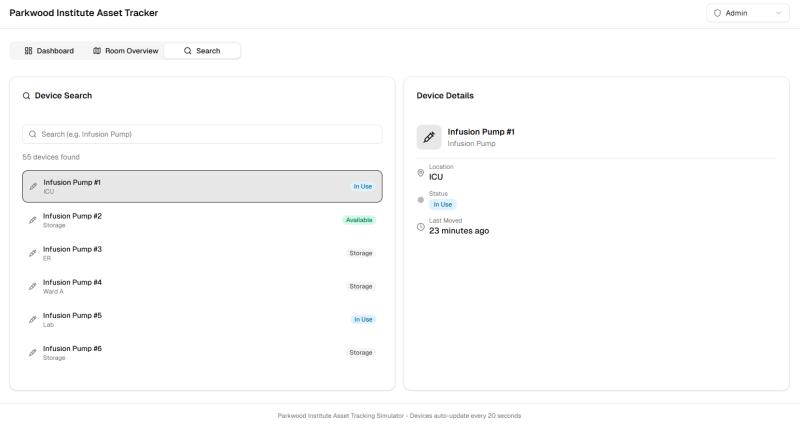
The admin dashboard shows the numbers they care about, like total devices, how many are available, in use, or sitting in storage, plus a live “recently moved” feed. The search panel lets an admin pull up any device by name and see its full details: location, status, last moved.
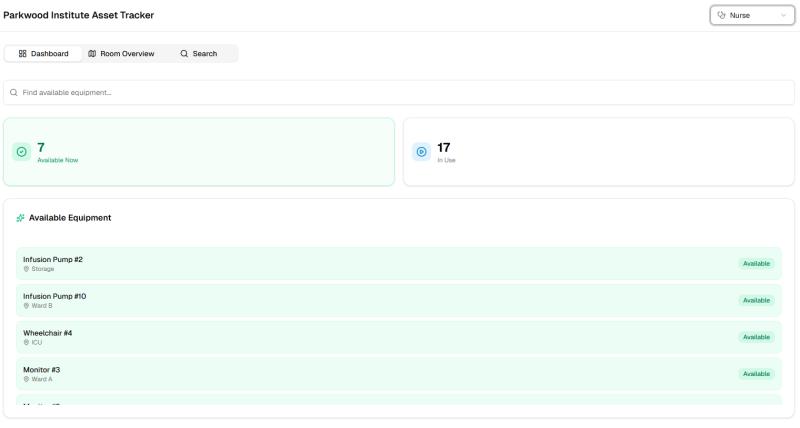
The nurse view strips all that out. A nurse doesn't care about inventory totals, they care about one thing: what's available right now and where. So that's all it shows.
There's also a room overview, so you can see a whole floor and what equipment is sitting in each space at a glance.
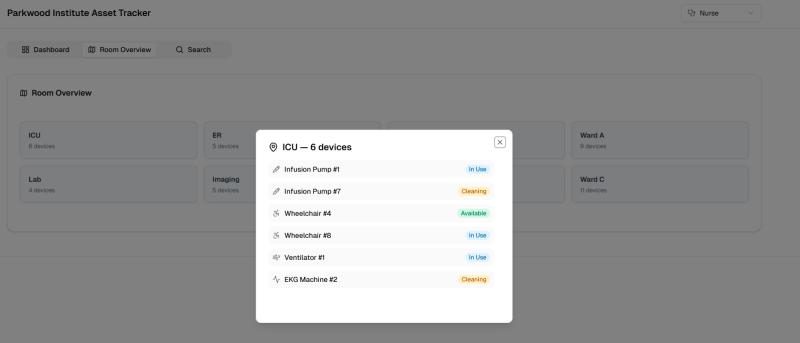
I spent a good chunk of the build phase just fixing bugs, like buttons that wouldn't fire and logic that broke, and redesigning the dashboard until it actually felt clean instead of cluttered.
What I shipped
- Built a real-time asset-tracking web app in React and TypeScript that surfaces live device locations across departments, so staff locate equipment 60% faster.
- Designed a low-power update strategy that reduces radio transmission frequency while preserving real-time accuracy, extending tag battery life from months to years.
- Built interactive dashboards with search, status filtering, and per-department views, giving staff filtered visibility into what is available.
Taking it to the showcase
We built this out into a real prototype and took the whole thing to the first-year engineering design showcase. Here's the board we put together, swipe through the panels:
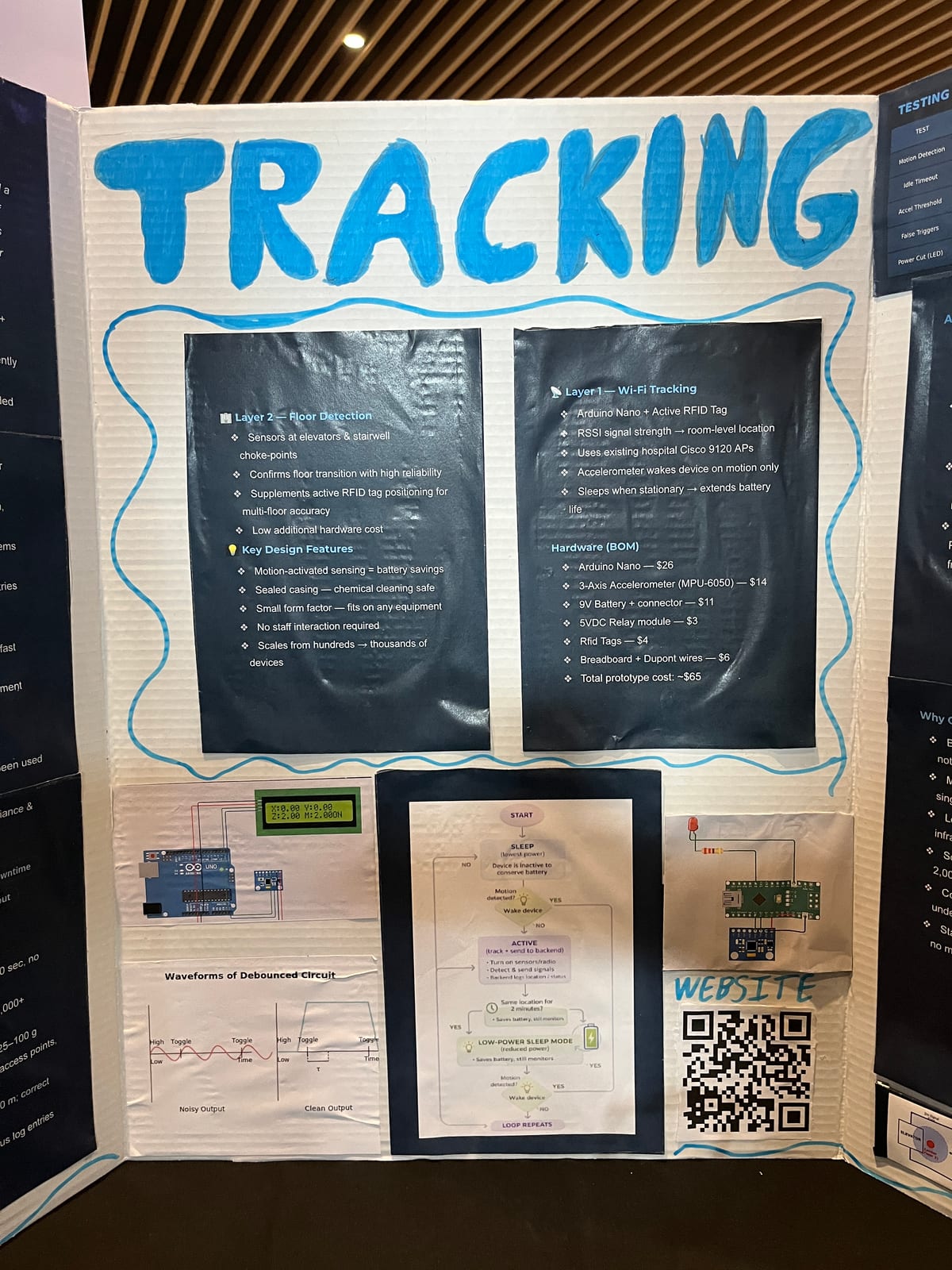
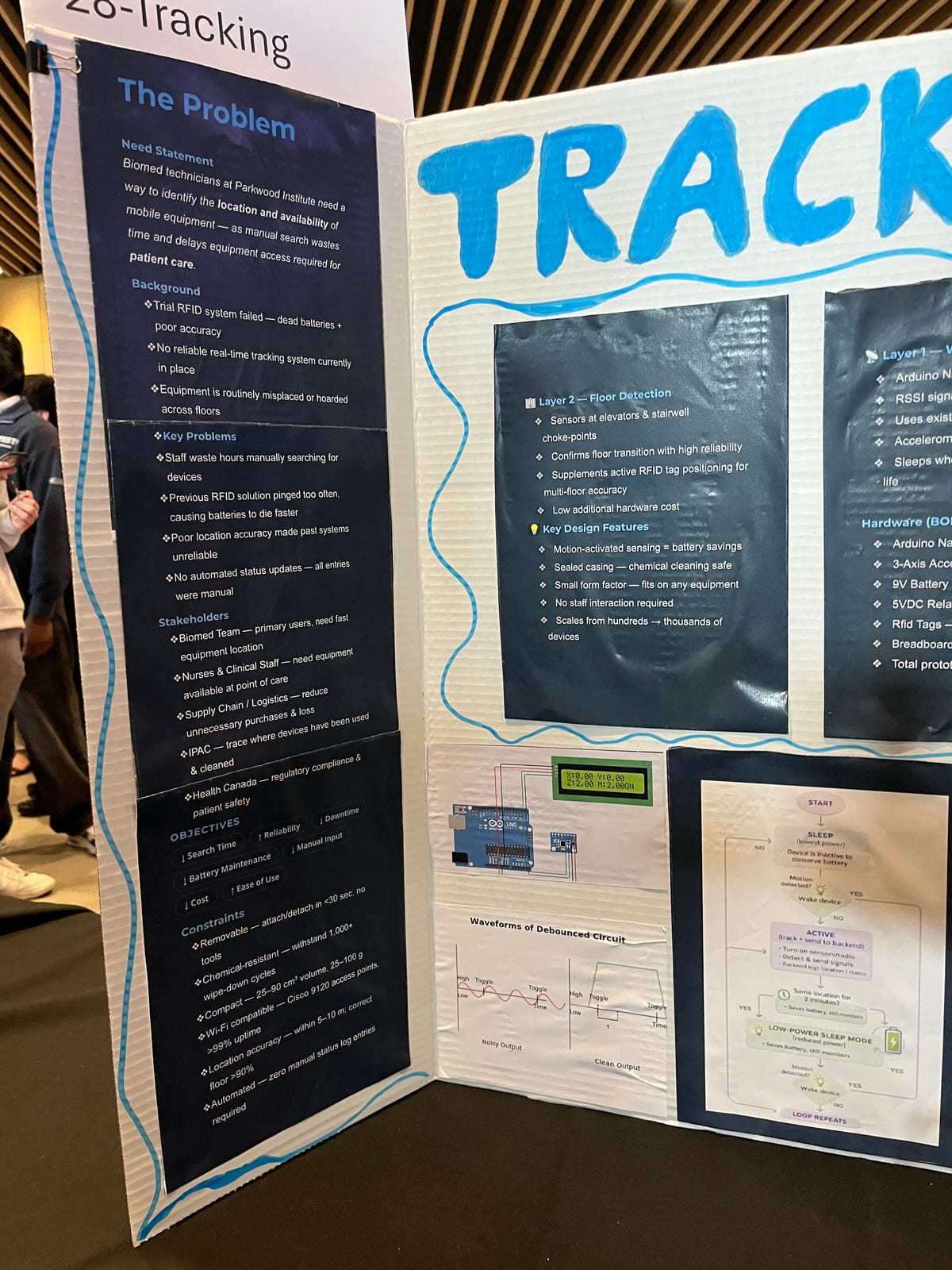
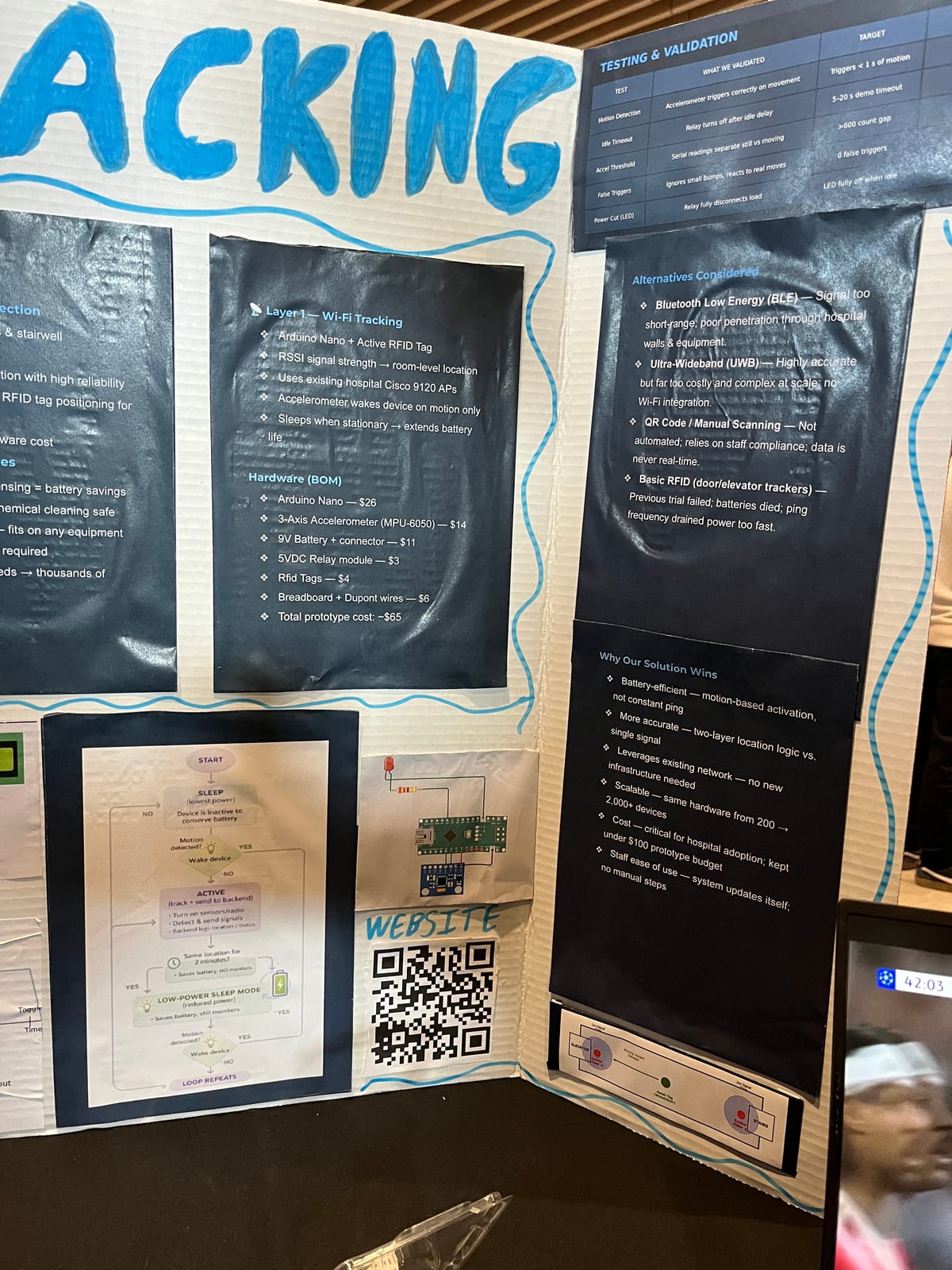
The board head-on — the two tracking layers, the bill of materials, and the sleep/wake state machine.
The board lays out the two-layer idea we landed on: Wi-Fi signal strength gives you room-level location off the hospital's existing access points, and RFID tags at the elevators and stairwells catch the moment something changes floors. On top of that is the state machine that runs the battery trick, sleep, wake on motion, track for a bit, then drop back to low-power sleep if it hasn't moved in two minutes. No new infrastructure, no staff doing anything, and the whole prototype came in around $65.
What I took away from it
Best lesson of the whole project: the problem the client tells you is almost never the real problem. They said “we can't find our equipment.” The real problem was cost, human laziness, and dead batteries. If we'd built a great locating system and ignored those three, it would've ended up exactly like every system they'd already thrown out.
Build for how people actually behave, not how you wish they'd behave. Nurses won't update logs, so don't build anything that needs them to. That one assumption shaped the entire design.